
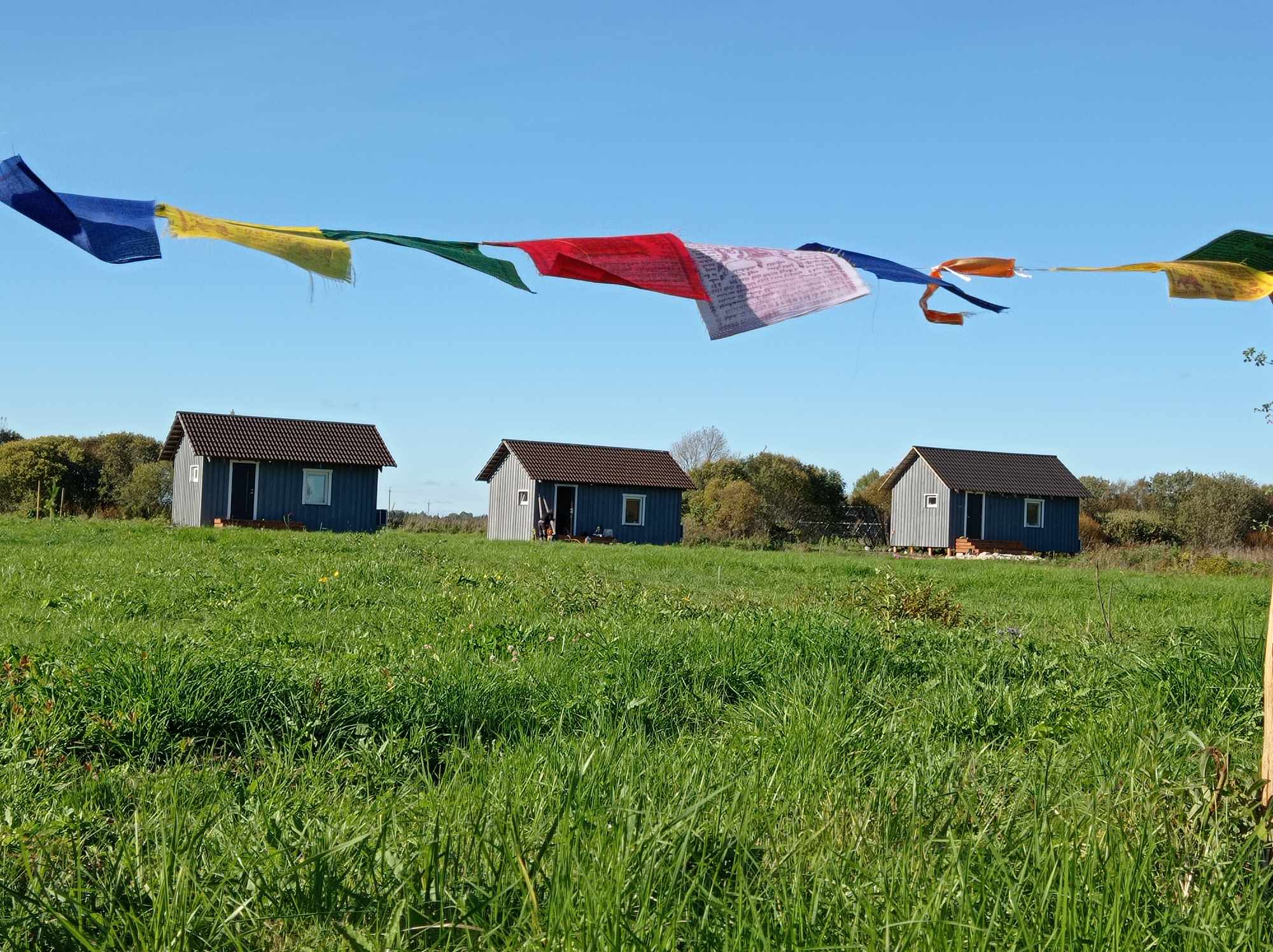
according to the Pema Lingpa Lineage at the Samten Lhündrup Gatsel (A Grove of Effortless Concentration) Center, Estonia, Europe.
Retreat Master: Khenpo Karma Wangyel
Gangteng Rinpoche has said: “Staying in a retreat house is not like staying in an ordinary house; it is a house of awakening—awakening in a three-year retreat is possible!”
INQUIRIES AND REGISTRATION
To express interest or inquire about practical details, please contact:
Email: yeshekhorloest@gmail.com (www.yeshekhorlo.ee). Alternatively, you may contact Khenpo Karma Wangyel directly.
CANDIDATE PROFILE
- Approval from Gangteng Tulku Rinpoche or Khenpo Karma Wangyel
- Mental & Physical Stability: A stable mental state and good physical health suitable for long-term isolation.
- Practice Experience: Previous experience with long recitation and preliminary practices (Ngöndro) or silent sitting practices. Candidates should have experience with shorter retreats (1–3 months or more) and a solid knowledge of the Buddhadharma.
- Commitment: Ability to adhere to strict retreat discipline and lineage instructions.
- Dietary Awareness: Maintaining a mindful diet to support energetic balance.
RETREAT STRUCTURE
The 3-year retreat follows the traditional stages of the Pema Lingpa lineage under the guidance of the Retreat Master: - Preliminary Practices: ngöndro.
- Generation & Completion Stages: Training in the Three Roots (Lama, Yidam, Khandro).
- Advanced Training: Dzogchen practices according to the Pema Lingpa tradition.
FINANCIAL & PRACTICAL DETAILS
Retreat Fee: €10,000
Covers general maintenance (repairs, grass cutting), fuel costs, and food delivery. Also includes travel expenses and teaching fees for Rinpoche, Khenpo, and other teachers, as well as funds for future construction (teaching hall and retreat houses).
Refund Policy: If a participant leaves during the first year, €5,000 will be refunded. No refunds will be issued for departures after the first year, as costs (maintenance, heating, teaching costs etc.) are shared equally among all retreatants to ensure the center’s
continued operation (being a group retreat, new participants cannot be accepted if somebody is leaving in the middle).
Personal Costs:
Food (price can be very variable, starting from 100 euros per month) are at the practitioner’s own expense. Food is cooked by retreatants themselves;
electricity and heating costs (minimal in summer (max 5 euros per month from June to September), 40-80 euros per month in winter, might change in the future).
health insurance
Food Logistics:
Standard food delivery is organized once every 14 days. Due to the bi-weekly schedule, practitioners must maintain a modest diet and a flexible attitude toward available items (during prostrations’ period we try to bring as much as everybody likes, it is easy to become exhausted)
If necessary, participants may order not easily perishable food online.
Ideally, candidates should have experience living in simple (or non-Western) conditions, where the temporary satisfactions of a consumerist society are not readily available.
Additional Deliveries: If more frequent delivery is required, we can make private arrangements.
Communication: An internet connection is available in the service building/temple for urgent communication (emails or contacting Khenpo-la or caretakers).
ACCOMMODATION & LIVING CONDITIONS
The retreat is held at the Samten Lhündrup Gatsel Center, a 1.8-hectare fenced area outside of Umbusi village. The remote location ensures a quiet environment for the duration of the retreat.
There are five private cottages (approx. 25 m²) designed for long-term solitary practice. There is a possibility to quickly build two more cottages (electricity, sewage system and water connections are completed).
Each cottage is fully equipped for isolation, including:
A meditation room with a large altar and a bed.
A kitchenette (stove, sink, and fridge), bathroom with toilet and shower.
A small terrace.
Air-source heat pumps and solar energy.
The center also features a service building with a communal washing machine, additional fridge and storage space, and a small temple for essential group practices